How Can Space-Saving Clothes Hangers Be Produced for Small-Scale Laundry Businesses?
If you run a small-scale laundry business, a neighborhood dry cleaner, or a drop-off garment care service, you already know that space is your most scarce and most expensive resource. Every square meter of your shop costs rent, lighting, heating, and labor. Yet a significant portion of that space is consumed by one of the most mundane items in your operation: the clothes hanger.
Standard plastic hangers are bulky — typically 15–18 mm thick at the shoulder. A standard garment rail that holds 80 garments on regular hangers might hold 130–150 garments on slim, space-saving hangers. That is a 40–50% increase in hanging capacity with zero additional floor space. For a laundry business processing 200–500 garments per day, the difference between standard and space-saving hangers translates directly into fewer rails needed, smaller shop footprint required, faster garment sorting and retrieval, and lower monthly overhead.
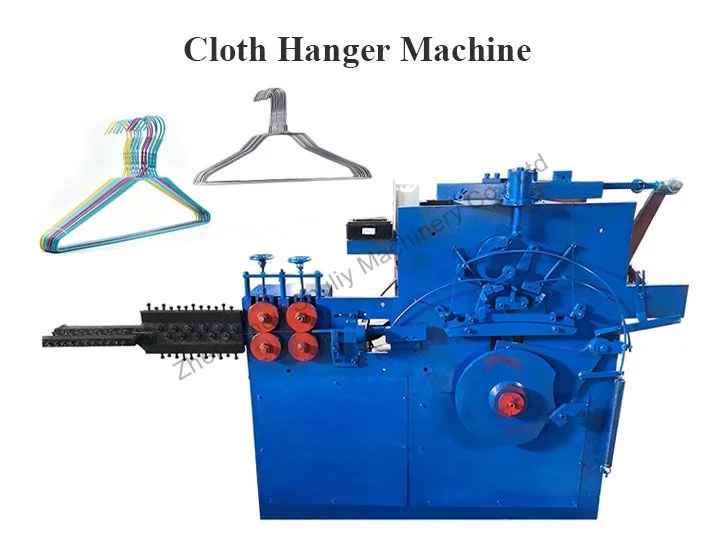
This article walks through how space-saving hangers are designed, what makes them effective, and how an automatic hanger making machine makes in-house production feasible and profitable for small-scale operations.

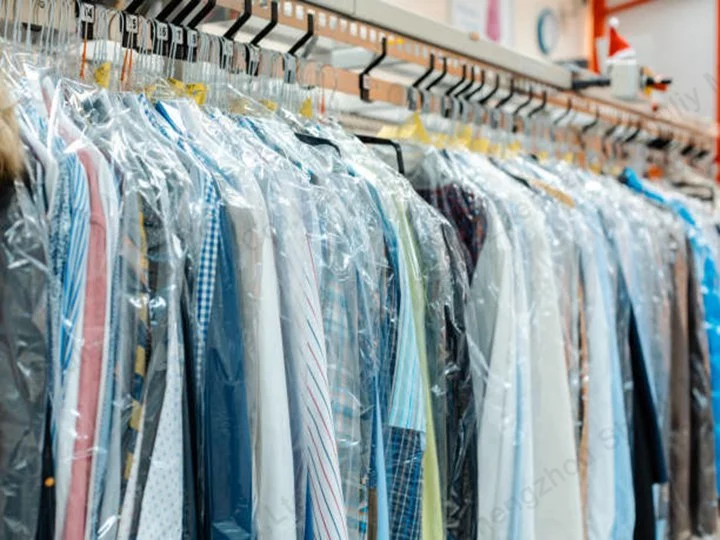
Understand the Space Economics of Laundry Hangers
Before diving into production, it helps to quantify exactly how much space standard hangers waste. Here is a comparison of common hanger types used in laundry and garment care businesses:
| 옷걸이 유형 | Thickness | Garments per 1.5m Rail | Space Utilization |
|---|---|---|---|
| Standard plastic hanger | 15–18 mm | 80–100 | Baseline |
| Standard wire hanger | 3–5 mm | 120–140 | +50% |
| Slim velvet/flocked hanger | 5–6 mm | 130–150 | +60% |
| Flat wire space-saving hanger | 2–3 mm | 150–170 | +70% |
The numbers are clear. Flat wire hangers — at just 2–3 mm thick — nearly double the capacity of a standard garment rail. For a laundry business with 10 rails, switching from standard plastic hangers to slim wire hangers could increase total hanging capacity from 800–1,000 garments to 1,500–1,700 garments — without adding a single rail or expanding the shop.
This matters because garment hanging space directly constrains your daily throughput. When your rails are full, you either turn away customers, pile garments on tables (which causes wrinkles and customer complaints), or rush to process and clear garments — which leads to quality errors. Adequate hanging capacity, enabled by space-saving hangers, lets you process more garments per day, stage them neatly for pickup, and maintain a professional appearance that customers trust.
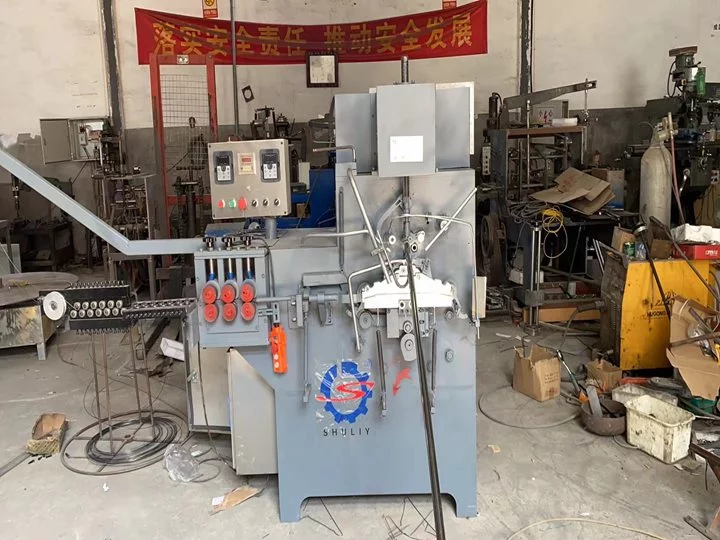
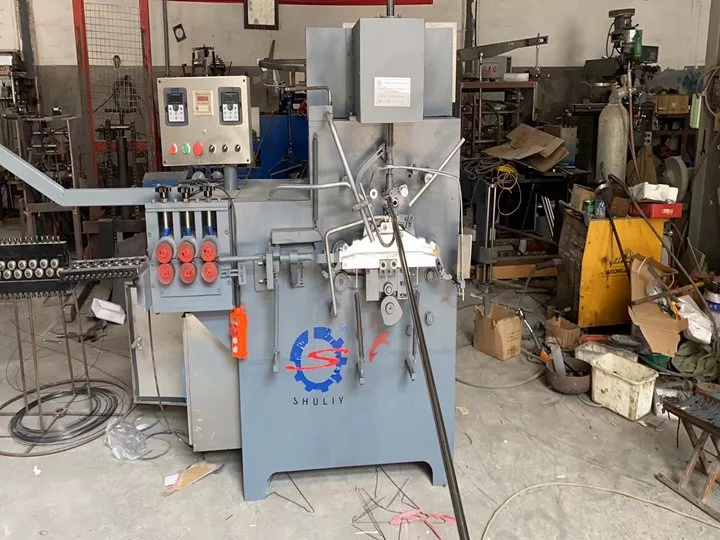
Design Hangers Specifically for Laundry Operations
Space-saving hangers for laundry businesses are not just smaller versions of retail hangers. They are designed with specific operational needs in mind:
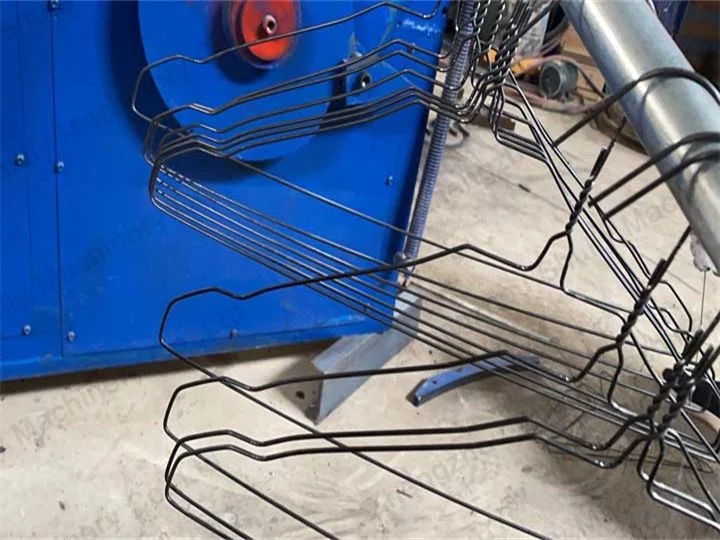
- Slim profile: Wire diameter of 1.6–2.2 mm keeps the hanger flat, maximizing rail density. A good automatic hanger making machine can handle this wire range precisely.
- Flat shoulder design: Rather than the curved, contoured shoulders of retail hangers, laundry hangers often use a simpler flat or slightly angled shoulder that works across garment types — shirts, blouses, dresses, and lightweight jackets.
- Corrosion resistance: Laundry environments involve steam, humidity, and frequent contact with damp garments. Galvanized wire or PVC-coated wire prevents rust that would stain clothes and generate customer complaints.
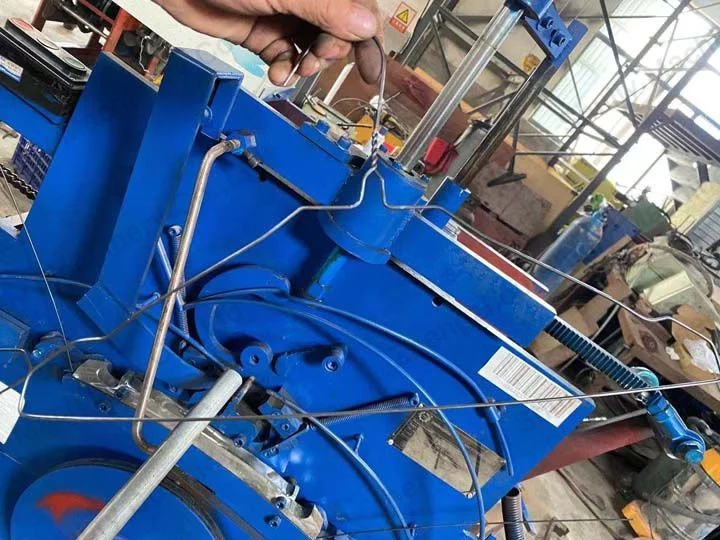
- Standardized hook: A uniform hook size fits all common garment rails, conveyor systems, and hanging loops. The automatic hanger making machine forms the hook as part of the same continuous process, ensuring consistency.
- Lightweight: Each hanger weighs only 15–30 grams, reducing shipping costs when supplying other laundry businesses and minimizing rail sagging under load.
- Optional non-slip coating: PVC or flocking coating prevents silk, satin, and lightweight garments from sliding off — a common frustration with bare wire hangers.

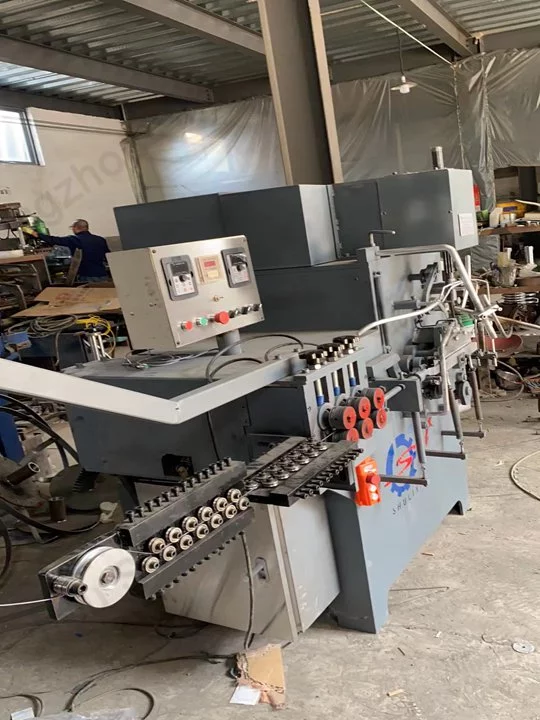
Why an Automatic Hanger Making Machine Changes the Economics?
For a small-scale laundry business processing 200–500 garments per day, hanger consumption is significant. Even at wholesale prices of $0.05–0.15 per wire hanger, a business using 300 hangers per day spends $5,475–16,425 per year on hangers alone — and that is assuming zero breakage, loss, or theft.
An automatic hanger making machine transforms this cost center into a cost advantage:
- Raw wire cost: Galvanized wire costs approximately $0.8–1.5 per kilogram. A standard wire hanger uses about 15–25 grams of wire, putting raw material cost at $0.012–0.038 per hanger — a fraction of the wholesale purchase price.
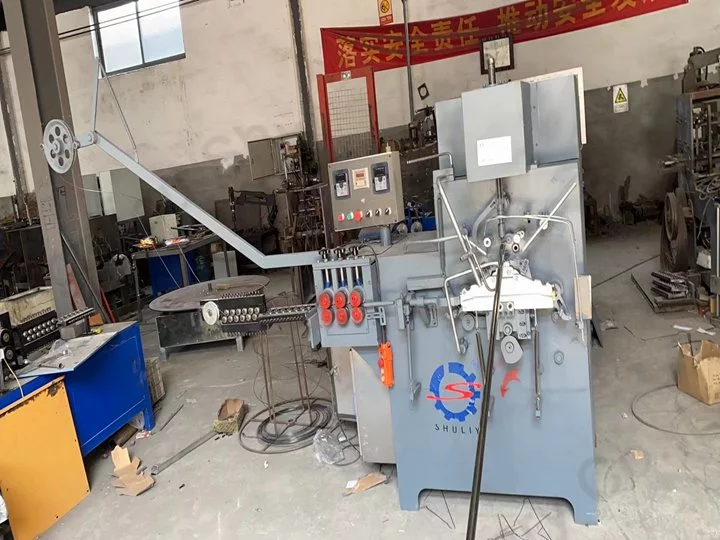
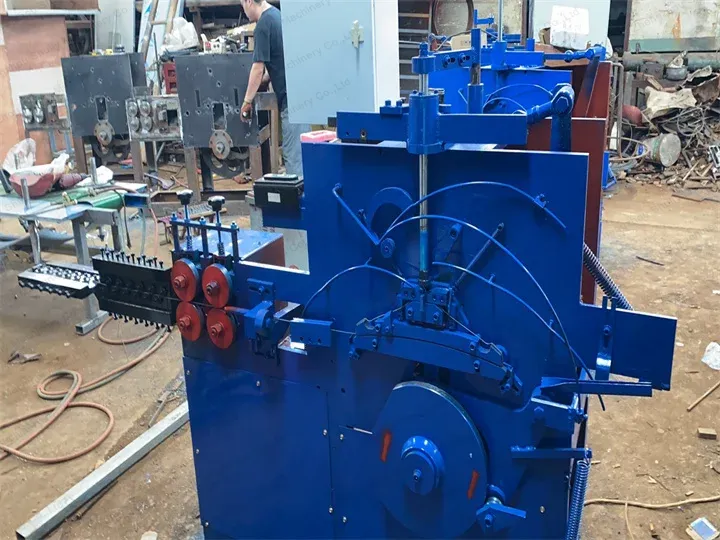
- Machine output: A standard automatic hanger making machine produces 25–35 hangers per minute — that is 1,500–2,100 hangers per hour or 12,000–16,800 hangers per 8-hour shift.
- Labor requirement: The machine requires only 1 operator to load wire and monitor production. No skilled wire-forming experience is needed.
- Payback period: For a laundry business spending $8,000+ per year on hangers, an automatic hanger making machine can pay for itself in 3–8 months, after which every hanger produced costs only the raw wire.
Beyond cost savings, the machine gives you design control. Need a slimmer hanger for a new conveyor system? Need a slightly wider shoulder for coats in winter? Need branded PVC colors to differentiate your service? The machine adapts to these requirements with mold and setting changes — no waiting for a supplier to manufacture and ship a custom order.
Produce Multiple Hanger Types on One Machine
One of the most valuable features of an automatic hanger making machine is its versatility. A single machine can produce multiple hanger types that serve different needs within a laundry business:
- Standard flat wire hangers: The workhorse for everyday shirts, blouses, and lightweight garments. 1.8–2.0 mm wire, flat shoulder, 16-inch width. Maximum rail density.
- Coat/jacket hangers: Wider and stronger — 2.2–2.5 mm wire, 17–18-inch width, with broader shoulder angle to support heavier garments without shoulder bumps.
- Pants/trouser hangers: Includes a crossbar or clip mechanism for hanging trousers without folding. The machine can form the crossbar as part of the wire bending sequence.
- Children’s garment hangers: Smaller — 14-inch width, 1.6–1.8 mm wire, scaled-down proportions.
- Notched shoulder hangers: For garments with straps — camisoles, tank tops, dresses with thin straps. Notches are formed by the bending die during the same cycle.
- Custom branded hangers: With PVC coating in your business colors, logo-embossed hooks, or unique shapes that make your hangers instantly recognizable to customers.
Switching between types requires a mold/die change of 15–30 minutes (or under 10 minutes with quick-release clamping) plus a PLC recipe selection. This means a laundry business can produce standard hangers in bulk for daily use, then switch to specialty hangers for specific customer needs — all on one machine.

Add PVC Coating for Premium and Non-Slip Hangers
Bare galvanized wire hangers are economical and functional, but for premium garment care — especially silk, satin, lightweight knits, and formal wear — a non-slip surface is essential. PVC coating solves this while adding visual appeal and corrosion protection.
An integrated PVC coating station in your hanger production line includes:
- Pre-heating: Formed hangers pass through a pre-heating oven at 200–250°C to prepare the wire surface for coating adhesion.
- Fluidized bed dipping: Heated hangers are dipped into a fluidized bed of PVC powder. The powder melts on contact, forming a smooth, even coating 0.3–0.8 mm thick across the entire hanger surface.
- Curing: Coated hangers pass through a curing oven at 180–200°C for 10–15 minutes to fully set the PVC layer.
- Cooling: Hangers cool on a conveyor, after which the PVC coating is fully bonded, non-peeling, and ready for use.
PVC-coated hangers serve two purposes in a laundry business: they protect delicate customer garments from wire marks and slipping, and they create a premium product that can be sold to other laundry businesses, dry cleaners, and boutique retailers at a higher price point. The coating is available in standard colors (white, black, blue, grey, red) and can be custom-matched to your brand.

Choose the Right Automatic Hanger Making Machine
Selecting the right automatic hanger making machine for a small-scale laundry business requires evaluating several key factors:
- Wire diameter range: Ensure the machine handles 1.6–2.5 mm wire — covering the full range from slim shirt hangers to coat hangers.
- Hanger size capability: From 14-inch children’s hangers to 18-inch adult/coat hangers. Confirm the machine’s bending capacity matches your product needs.
- Production speed: 25–35 hangers per minute is standard for small-to-medium operations. Higher-speed models (50+ per minute) are available but may be over-specified for a single laundry business.
- CNC/PLC control system: Programmable recipes, touch-screen interface, and the ability to store 20+ hanger designs for quick switching.
- Quick-change tooling: Die and mandrel changes in 15–30 minutes (or under 10 minutes with quick-release systems). Critical if you produce multiple hanger types.
- Integrated hook forming: The machine should form the hook as part of the same cycle — not require a separate hook attachment step.
- Welding option (if needed): For heavy-duty hangers, integrated resistance welding of the center joint.
- PVC coating compatibility: If you plan to produce coated hangers, ensure the machine’s output integrates with a coating line.
- Footprint: The machine and ancillary equipment should fit within your available space — typically 30–60 square meters for a compact line.
- After-sales support: Mold customization, spare parts, and technical support — especially important if you are new to hanger production.


Ready to Start Producing Your Own Space-Saving Hangers?
Whether you want to cut hanger costs for your own laundry business, create branded hangers that customers recognize, or start a side business supplying hangers to other garment care operations in your area, an automatic hanger making machine is the key equipment that makes it possible.
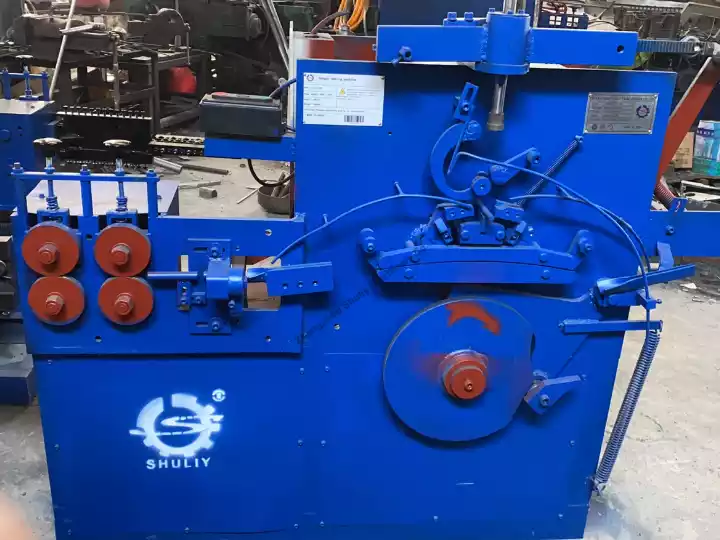
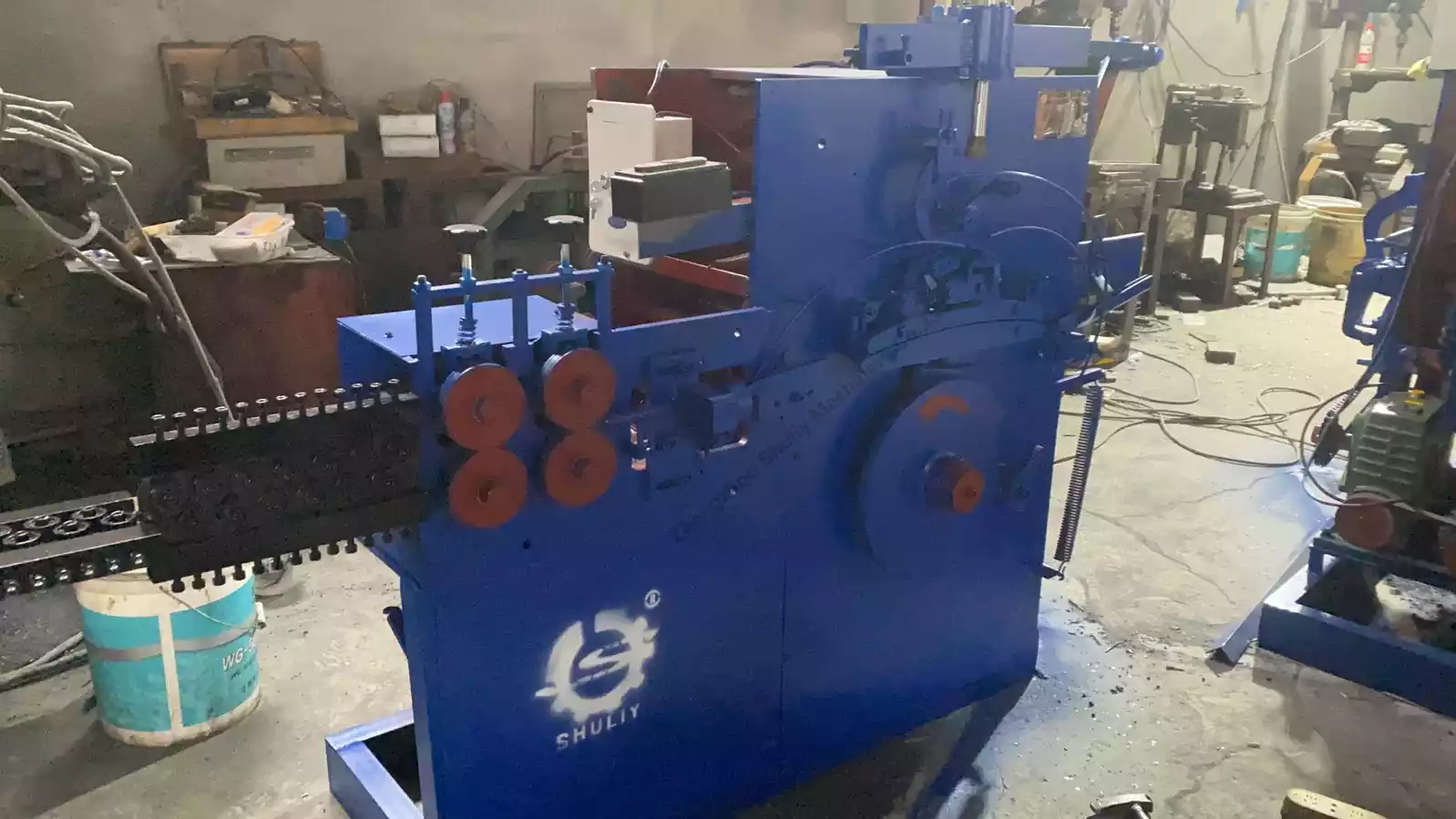
Our machines are engineered for small-to-medium scale production — with servo-controlled wire feeding, CNC bending, integrated hook forming, quick-change tooling for multiple hanger types, and PLC recipe storage for instant size switching. From bare galvanized wire hangers for maximum rail density to PVC-coated premium hangers for delicate garments, one machine covers your entire hanger needs.
Contact us today for a free consultation and quotation. Send us the following details, and we will respond within 24 hours with a customized equipment recommendation and price:
- Your daily hanger usage (e.g., 200/day, 500/day, 1,000/day)
- Your desired hanger types (flat wire, coat hangers, pants hangers, children’s, notched, custom)
- Your wire preference (galvanized, stainless steel, PVC-coated)
- Your available workshop space (e.g., 30 m², 50 m², 100 m²)
- Your target production output (hangers per day or per shift)
- Any special requirements (PVC coating line, branded colors, CE certification, voltage, etc.)
Reach out now and let our engineers help you build a compact hanger production line that saves space, cuts costs, and turns your hanger supply from an expense into an advantage.